
Accelerating Enterprise Agentic AI: The Convergence of Orchestration and Amazon Bedrock
Introduction: The Era of Agentic AI
The landscape of artificial intelligence is undergoing a seismic shift. We are moving rapidly beyond the phase of simple chatbots and isolated generative text tasks into the era of Agentic AI. In this new paradigm, AI models do not merely generate text; they reason, plan, and execute complex workflows across disparate enterprise systems. Recent developments in the cloud ecosystem, particularly within the realm of Amazon Bedrock News, highlight a growing trend: the deep integration of robust orchestration layers with powerful foundation models.
For years, enterprises have struggled to bridge the gap between legacy business logic and modern generative AI. While OpenAI News and Google DeepMind News frequently highlight advancements in raw model capabilities, the real challenge for businesses lies in implementation—specifically, how to make these models interact safely and effectively with corporate data and APIs. This is where the synergy between orchestration platforms (like those championed in IBM Watson News) and scalable infrastructure providers like AWS becomes critical.
By leveraging tools like Amazon Bedrock Agents, developers can now build systems that maintain conversational context, manage multi-step processes, and automate tasks that previously required human intervention. This article explores the technical architecture of building enterprise-grade Agentic AI, focusing on how to utilize Amazon Bedrock to create agents that are not just conversational, but operational.
Section 1: Core Concepts of Agentic AI Architecture
To understand the significance of recent Amazon Bedrock News, one must first grasp the architecture of an AI Agent. Unlike a standard Large Language Model (LLM) interaction, which is stateless and passive, an agent possesses three distinct characteristics: Perception (via Knowledge Bases), Reasoning (via Foundation Models), and Action (via Action Groups).
The Foundation Model as the “Brain”
At the core of any agent is the Foundation Model (FM). Amazon Bedrock provides access to a variety of high-performance models. Whether you are following Anthropic News for the latest Claude 3 updates, Cohere News for Command R+, or Meta AI News for Llama 3, the choice of model dictates the reasoning capability of your agent. For complex orchestration, models with high reasoning capabilities and large context windows are essential.
Orchestration and Chain of Thought
When an agent receives a prompt, it doesn’t just answer. It engages in a “Chain of Thought” (CoT) process. It breaks the user’s request down into sub-tasks. For example, if a user asks, “Update the customer address and send a confirmation email,” the agent must identify two distinct actions and execute them in order. This orchestration logic is what separates standard RAG (Retrieval-Augmented Generation) from true Agentic AI.
Below is a Python example using the Boto3 library to define an Agent in Amazon Bedrock. This is the foundational step in setting up an autonomous workflow.
import boto3
import time

# Initialize the Bedrock Agent client
client = boto3.client('bedrock-agent', region_name='us-east-1')

def create_bedrock_agent(agent_name, agent_role_arn, model_id):
    """
    Creates a Bedrock Agent configured for orchestration.
    """
    try:
        response = client.create_agent(
            agentName=agent_name,
            agentResourceRoleArn=agent_role_arn,
            foundationModel=model_id,
            instruction="""
                You are an advanced enterprise assistant.
                You have access to corporate tools to manage customer data.
                Always verify the customer ID before making changes.
                If a tool fails, retry once before asking the user for clarification.
            """,
            idleSessionTTLInSeconds=1800
        )

        agent_id = response['agent']['agentId']
        print(f"Agent created successfully with ID: {agent_id}")
        return agent_id

    except Exception as e:
        print(f"Error creating agent: {e}")
        return None

# Example Usage
# Ensure you have a valid IAM Role ARN and Model ID (e.g., Anthropic Claude)
# create_bedrock_agent("EnterpriseOrchestrator", "arn:aws:iam::123456789012:role/service-role/AmazonBedrockExecutionRoleForAgents_test", "anthropic.claude-3-sonnet-20240229-v1:0")
In this snippet, the instruction parameter is crucial. It acts as the system prompt that governs the agent’s behavior, similar to how one might configure a custom GPT. This aligns with concepts seen in LangChain News and LlamaIndex News regarding prompt engineering for agents.
Section 2: Implementing Action Groups and Knowledge Bases
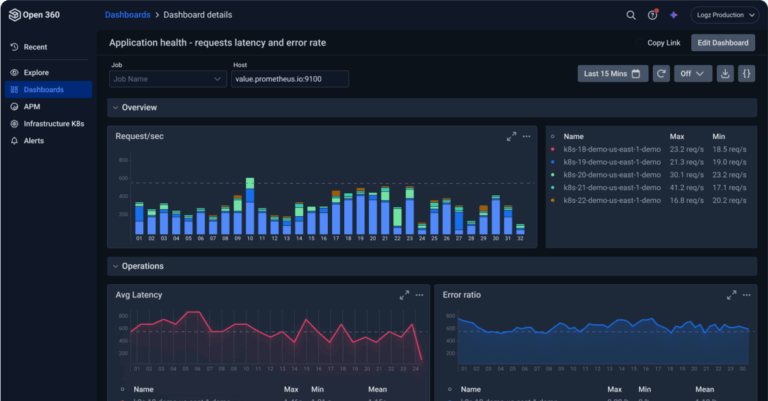
The true power of an agent lies in its ability to interact with the outside world. In Amazon Bedrock, this is handled through Action Groups. An Action Group defines a set of APIs that the agent can call. These are typically backed by AWS Lambda functions and defined using OpenAPI schemas.
Connecting Logic to Lambda
When the foundation model decides it needs to perform an action (like “Check Inventory”), it generates a structured request. Bedrock intercepts this, invokes the corresponding Lambda function, and feeds the response back to the model. This loop allows the model to “see” the result of its action and continue the conversation.
This approach is vital for integrating with legacy systems, a topic often discussed in IBM Watson News and Azure AI News. By decoupling the AI reasoning from the business logic execution, enterprises can maintain strict security boundaries.
Here is an example of a Lambda function designed to serve as an Action Group handler for a Bedrock Agent. This function processes events sent by the agent and returns structured data.
import json

def lambda_handler(event, context):
    """
    AWS Lambda Handler for Amazon Bedrock Agent Action Group.
    """
    print(f"Received event: {event}")

    agent = event['agent']
    actionGroup = event['actionGroup']
    function = event['function']
    parameters = event.get('parameters', [])

    response_body = {
        "TEXT": {
            "body": "Error: Function not found."
        }
    }

    # Extract parameters into a dictionary for easier access
    param_dict = {p['name']: p['value'] for p in parameters}

    if function == 'get_customer_status':
        customer_id = param_dict.get('customerId')
        # Simulate a database lookup
        # In a real scenario, you might use SQL, DynamoDB, or an API call here
        if customer_id == "12345":
            response_body["TEXT"]["body"] = json.dumps({
                "status": "Active",
                "tier": "Platinum",
                "last_contact": "2023-10-25"
            })
        else:
            response_body["TEXT"]["body"] = json.dumps({"error": "Customer not found"})

    elif function == 'update_subscription':
        # Logic to update subscription
        response_body["TEXT"]["body"] = json.dumps({"status": "Success", "message": "Subscription updated."})

    # Construct the response required by Bedrock
    action_response = {
        'actionGroup': actionGroup,
        'function': function,
        'functionResponse': {
            'responseBody': response_body
        }
    }

    return {'response': action_response}
Integrating Knowledge Bases (RAG)
Agents often need to consult documentation before taking action. This is where Retrieval-Augmented Generation (RAG) fits in. Amazon Bedrock Knowledge Bases automate the RAG workflow. You point Bedrock to an S3 bucket containing your data, and it handles the chunking, embedding, and storage in a vector database.
While you can use standalone vector solutions—referenced frequently in Pinecone News, Milvus News, Weaviate News, Chroma News, or Qdrant News—Bedrock simplifies this by managing the vector store (like OpenSearch Serverless or Aurora) directly. This integration ensures that the agent has immediate access to semantic search capabilities without complex infrastructure management.
Section 3: Advanced Orchestration and Context Management
One of the significant challenges in Agentic AI is maintaining context over a long conversation or a complex multi-step workflow. If a user interrupts a process or changes the topic, the agent must handle the context switch gracefully. This is where the partnership of orchestration tools and foundational models shines.
Managing the Trace
When developing agents, visibility is key. You need to know why the agent made a specific decision. Amazon Bedrock provides a “Trace” capability that reveals the model’s reasoning steps (Pre-processing, Orchestration, Post-processing). Analyzing these traces is similar to using tools mentioned in LangSmith News or MLflow News for observability.
Below is a Python snippet demonstrating how to invoke an agent and process the streaming response, including the “Trace” to understand the agent’s thought process.
import boto3
import uuid

# Initialize the Bedrock Agent Runtime client
agent_runtime = boto3.client('bedrock-agent-runtime', region_name='us-east-1')

def invoke_agent_with_trace(agent_id, agent_alias_id, prompt):
    """
    Invokes a Bedrock Agent and prints the response stream and reasoning trace.
    """
    session_id = str(uuid.uuid4()) # Unique session ID for context maintenance

    try:
        response = agent_runtime.invoke_agent(
            agentId=agent_id,
            agentAliasId=agent_alias_id,
            sessionId=session_id,
            inputText=prompt,
            enableTrace=True  # Enable tracing to see the Chain of Thought
        )

        event_stream = response['completion']

        for event in event_stream:
            # Handle the actual text response chunk
            if 'chunk' in event:
                data = event['chunk']['bytes']
                print(f"Agent Response: {data.decode('utf8')}")

            # Handle the trace object (Reasoning steps)
            if 'trace' in event:
                trace = event['trace']
                if 'orchestrationTrace' in trace['trace']:
                    orch_trace = trace['trace']['orchestrationTrace']

                    if 'rationale' in orch_trace:
                        print(f"\n[Reasoning]: {orch_trace['rationale']['text']}\n")

                    if 'invocationInput' in orch_trace:
                        print(f"\n[Calling Tool]: {orch_trace['invocationInput']['actionGroupInvocationInput']['function']}\n")

    except Exception as e:
        print(f"Error invoking agent: {e}")

# Example Usage
# invoke_agent_with_trace("AGENT_ID", "ALIAS_ID", "Check the status of customer 12345")
The Role of External Orchestrators
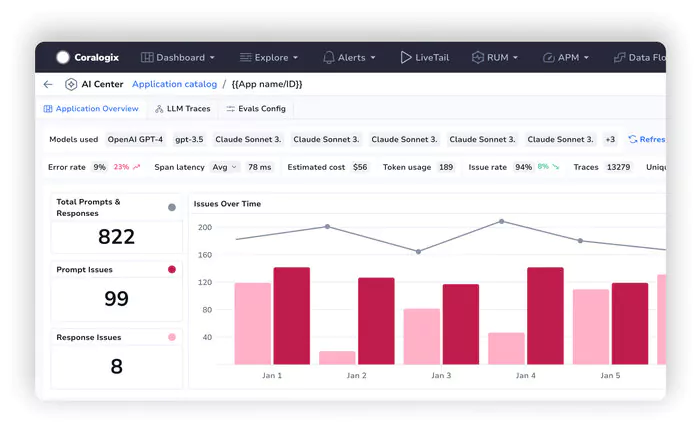
While Bedrock Agents handle the immediate execution loop, large enterprises often require a higher layer of orchestration. This is where platforms like IBM watsonx Orchestrate come into play. These platforms can act as the “manager” of multiple agents, handling user identity, complex business approvals, and cross-application workflows.
In this architecture, the external orchestrator maintains the global state and delegates specific sub-tasks to Amazon Bedrock Agents. This allows for a modular design where specialized agents (e.g., an HR agent, an IT support agent) can be constructed independently but coordinated centrally. This modularity is a key topic in AutoML News and DataRobot News, where the focus is on scalable, manageable AI components.
Section 4: Best Practices, Security, and Optimization
Deploying Agentic AI in production requires rigorous attention to security and performance. As we see in Stability AI News and Mistral AI News, the open-weight model landscape is competitive, but for enterprise use, governance is paramount.
Implementing Guardrails
You cannot rely solely on the prompt to prevent an agent from hallucinating or discussing sensitive topics. Amazon Bedrock Guardrails provide a safety layer that intercepts inputs and outputs. This is comparable to concepts found in NVIDIA AI News regarding NeMo Guardrails.
Guardrails can block PII (Personally Identifiable Information), filter toxic content, and enforce topic boundaries. Below is a configuration example for applying a guardrail to an agent.
def create_guardrail(client):
    """
    Creates a content filtering guardrail for a Bedrock Agent.
    """
    response = client.create_guardrail(
        name='FinanceAgentGuardrail',
        description='Prevents investment advice and PII leakage',
        topicPolicyConfig={
            'topicsConfig': [
                {
                    'name': 'Investment Advice',
                    'definition': 'Providing specific stock picks or financial forecasting.',
                    'examples': ['Buy stock X', 'Market will crash'],
                    'type': 'DENY'
                }
            ]
        },
        contentPolicyConfig={
            'filtersConfig': [
                {'type': 'SEXUAL', 'inputStrength': 'HIGH', 'outputStrength': 'HIGH'},
                {'type': 'VIOLENCE', 'inputStrength': 'HIGH', 'outputStrength': 'HIGH'}
            ]
        },
        sensitiveInformationPolicyConfig={
            'piiEntitiesConfig': [
                {'type': 'SSN', 'action': 'BLOCK'},
                {'type': 'CREDIT_DEBIT_CARD_NUMBER', 'action': 'ANONYMIZE'}
            ]
        },
        blockedInputMessaging="I cannot discuss that topic.",
        blockedOutputsMessaging="Response filtered due to safety guidelines."
    )
    return response['guardrailId']
Optimization and Latency
Agents involve multiple round-trips (Model -> Orchestrator -> Lambda -> Model). This can introduce latency. To optimize:
- Model Selection: Use lighter models (like Haiku or Llama 3 8B) for simple routing tasks and reserve heavy models (Opus or Command R+) for complex reasoning. This tiered approach is often discussed in Hugging Face News.
- Provisioned Throughput: For high-volume agents, use Provisioned Throughput in Bedrock to ensure consistent performance, similar to reserved instances discussed in AWS SageMaker News.
- Caching: Implement caching at the Lambda layer for frequent queries to reduce calls to backend databases (e.g., Snowflake Cortex News integrations).
Monitoring and Evaluation
Continuous evaluation is critical. Tools like Weights & Biases News and Comet ML News are excellent for tracking experiments during the development phase. In production, utilize Amazon CloudWatch combined with Bedrock’s logging capabilities to monitor invocation rates and error types. For deep evaluation of agent performance (did it solve the user’s problem?), frameworks like RAGAS or TruLens are becoming industry standards.
Conclusion
The convergence of robust orchestration platforms and flexible generative AI services like Amazon Bedrock marks a turning point in enterprise technology. We are witnessing the maturation of Agentic AI, where the focus shifts from “what can the AI write?” to “what can the AI do?”
By leveraging the power of Amazon Bedrock Agents, combined with the structural discipline of enterprise orchestration layers (such as those pioneered by IBM), developers can build systems that are both powerful and governable. Whether you are integrating TensorFlow News based custom models or utilizing the latest APIs from OpenAI News or Anthropic News via Bedrock, the principles remain the same: clear definitions of tools, robust state management, and strict safety guardrails.
As the ecosystem evolves—with contributions from Google Colab News for prototyping to Vertex AI News and Azure Machine Learning News for competitive comparison—the ability to construct reliable agents will become a defining skill for the modern AI engineer. The tools are available today; the challenge is to architect them into solutions that drive real business value.