I spent the better part of last November arguing with a compliance officer. Let’s call him Dave.
Dave is a nice guy. He brings donuts on Fridays. But Dave also has a uncanny ability to kill my architectural dreams with a single acronym: GDPR. Or HIPAA. Or SOC2. Take your pick.
We were trying to ship a RAG (Retrieval-Augmented Generation) pipeline for our internal docs. The plan was simple: dump everything into a managed vector database, hook up an LLM, and call it a day. Managed services are great. I don’t want to manage stateful sets in Kubernetes. I don’t want to handle backups. I just want an API endpoint and a key.
But Dave looked at the architecture diagram, tapped a red marker on the “Public Cloud Vector DB” box, and asked, “Where exactly does this data live?”
“Uh, their cloud? Probably us-east-1?”
“And who has access to the underlying storage?”
“Well, the vendor…”
Dave didn’t even have to say no. The look was enough. Project stalled. We went back to self-hosting, which meant I spent my Christmas break debugging a persistent volume claim that refused to bind.
This is why the recent move by Qdrant towards a Managed Hybrid Cloud model is actually interesting. Not “paradigm-shifting” marketing fluff interesting. I mean actually, practically interesting for those of us who want the ease of SaaS but are handcuffed by data sovereignty requirements.
The “Have Your Cake and Eat It” Architecture
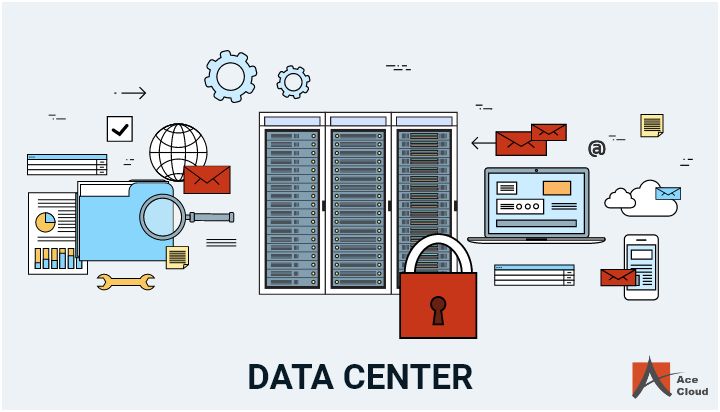
Cloud computing data center – Discover the Benefits of Data Centers in Cloud Computing
Here’s the thing about vector databases: they are heavy. They hold your most sensitive data—embeddings are just compressed meaning, after all. If you leak the vectors, you often leak the semantic essence of your secrets.
Until now, you had two bad choices:
1. Fully Managed (SaaS): You hand over your data to a vendor. Easy to use, scales well, but Dave from Compliance hates it.
2. Self-Hosted: You keep the data, but you also keep the pager. You are now a database administrator. Congratulations.
Qdrant’s hybrid approach splits the difference in a way that actually makes sense. They’ve decoupled the Control Plane from the Data Plane.
Basically, the Qdrant team manages the “brain” (the orchestration, the updates, the monitoring dashboard) in their cloud. But the “body” (the actual nodes storing your vectors and running the search) lives inside your Kubernetes cluster. In your VPC. Behind your firewall.
The data never leaves your environment. The control plane just tells your cluster, “Hey, spin up a new node,” or “Run a backup to your local S3 bucket.”
How It Actually Works (Without the Marketing Speak)
I got my hands on this setup recently to see if it was as clean as claimed.
You essentially install an agent—a Kubernetes Operator—inside your cluster. This agent establishes a secure outbound connection to Qdrant’s management backend. No inbound ports needed (thank god, because getting SecOps to open port 6333 to the internet is a non-starter).
Once the agent is running, you log into the Qdrant Cloud console. You click “Create Cluster.”
But instead of picking *their* AWS region, you pick *your* registered Kubernetes environment.
A few minutes later, pods spin up in your namespace. The console shows the cluster is healthy. You get metrics, logs, and upgrade buttons in the SaaS dashboard. But if you SSH into your worker nodes, the data is right there on your PVs.
It’s the same experience as using their managed cloud, but the physics of the data storage happen on your turf.
Connecting to the Hybrid Instance
Cloud computing data center – AWS Data Center Tour 1: Uncovering Cloud Computing – Amazon Future …
From a code perspective, nothing changes. That’s the best part. You don’t need a special “hybrid” client. You just point your existing Qdrant client to the new endpoint exposed by your ingress or internal service.
Here is a quick Python snippet. If you’ve used Qdrant before, this will look boringly familiar. That’s a good thing.
from qdrant_client import QdrantClient
from qdrant_client.http import models
import os

# In a hybrid setup, this URL points to your internal K8s ingress
# or a load balancer exposed within your VPC.
# No public internet traffic required.
URL = os.getenv("QDRANT_INTERNAL_URL", "http://qdrant-hybrid.internal:6333")
API_KEY = os.getenv("QDRANT_API_KEY")

# Initialize the client
client = QdrantClient(url=URL, api_key=API_KEY)

# Create a collection (this command goes to your local cluster)
client.recreate_collection(
    collection_name="enterprise_knowledge_base",
    vectors_config=models.VectorParams(
        size=1536,  # OpenAI embedding size
        distance=models.Distance.COSINE
    )
)

print(f"Collection created successfully at {URL}")

# Insert some dummy vectors
# This data stays within your VPC boundary
operation_info = client.upsert(
    collection_name="enterprise_knowledge_base",
    points=[
        models.PointStruct(
            id=1,
            vector=[0.1] * 1536,
            payload={"doc_type": "compliance_report", "confidential": True}
        )
    ]
)

print(f"Data status: {operation_info.status}")
The Latency Trade-off
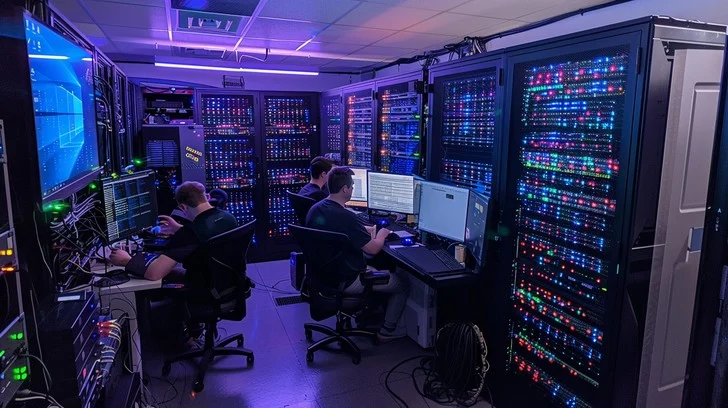
Server room technology – Free Server Room Activity Image – Technology, Servers, Datacenter …
I was worried about latency. If the control plane is in Qdrant’s cloud but the database is in my basement (metaphorically), is there a lag?
For search and ingestion, no. The client (your app) talks directly to the database nodes (your cluster). The data path doesn’t touch the control plane. It’s fast. Local network fast.
The only latency exists in the management operations. If you click “Upgrade Version” in the dashboard, it might take a couple of seconds for the agent to pick up the task and start rolling pods. I can live with that. I’m not resizing clusters twenty times a second.
Why This Actually Matters
I’m usually skeptical of “Hybrid” solutions. Often, it just means “we gave you a Docker container, good luck.”
But this feels different because it addresses the specific pain point of AI adoption in 2026: Trust.
We are past the “wow, look at the chatbot” phase. We are in the “how do we put our financial reports into this thing without getting sued” phase.
By keeping the vectors local, you bypass the data residency arguments. You can tell Dave, “Look, the data sits on the same servers as our Postgres DB. It never crosses the internet.” But you still get the automated backups, the monitoring, and the updates that keep your DevOps team from quitting.
The Verdict
Is it perfect? No. You still need a Kubernetes cluster. If you don’t have K8s expertise in-house, “Hybrid” just means you have two problems now: a database and an orchestration platform.
But if you are already running K8s (and let’s be honest, if you’re doing enterprise AI, you probably are), this removes the biggest friction point for vector search adoption.
I set up a test cluster yesterday. It took 15 minutes.
I didn’t have to write a single YAML file for a StatefulSet.
And most importantly, Dave from Compliance actually smiled.
That alone is worth the price of admission.